
tire_repair

Tire Size Calculator

Calculate tire dimensions and speedometer error when changing wheel sizes
edit_calendar Last updated: Jul 22, 2026 | verified Reviewed by Calkulator Team | timer 2 min read
Transport illustration
Transport

Compare tire sizes and check speedometer accuracy

Switching from 205/55R16 to 215/60R16? The new tire is taller, which means your speedometer reads slower than actual speed. This calculator shows the exact diameter difference and speedometer error at any speed.

tips_and_updates Keep the overall diameter within ±3% of stock — larger deviations affect ABS, traction control, and fuel efficiency.
New Tire Size
Format: Width/AspectRatio — e.g. 205/55R16
Width (mm)
Aspect %
Rim (in)
Stock/OEM Tire (for comparison)
Leave blank if not comparing
Width (mm)
Aspect %
Rim (in)
Tire Dimensions
Overall Diameter
Sidewall Height
Circumference
Revolutions/km
insights
Live Result Illustration
Visual summary — updates instantly as you enter values above
LIVE
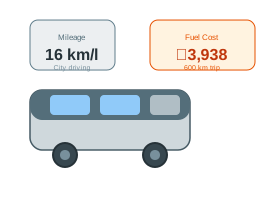
Journey & Fuel Cost Updates in real-time A B 600 km Fuel Required 37.5 L Fuel Cost ₹3,938 Fuel Efficiency 16 km/L
tips_and_updates

Real-Life Guide to Using the Tire Size Calculator

Tyre dimensions and speedometer error. Use the examples and checks below to turn the number into a practical decision.

When this calculator is useful

Used when considering upgrading to a different tyre or rim size than the vehicle's stock fitment, to check how the change affects overall wheel diameter, ground clearance, and how far off your speedometer reading will be from your true speed.

For most people, the best way to use the Tire Size Calculator is to try the real case first, then change one input at a time. That makes the trade-off visible. For example, with a loan calculator you can change tenure while keeping the same rate; with an investment calculator you can change return assumption while keeping the same monthly contribution; with a health, education or measurement calculator you can check how much one input changes the final category.

The result should answer a practical question: Can I afford this? How much should I save? Is this score enough? Is this measurement within range? What is the safer or cheaper option? If the output does not answer the decision clearly, adjust the inputs until the scenario matches your real situation.

lightbulb Real-Life Example
Upgrading from 15-inch to 16-inch rims: An owner wants to switch from the stock 195/65 R15 tyre to a 205/55 R16 tyre on a new set of rims and wants to know if this affects the speedometer.
1Stock overall diameter: (195 x 0.65 x 2) + (15 x 25.4) = 253.5 + 381 = 634.5mm. New overall diameter: (205 x 0.55 x 2) + (16 x 25.4) = 225.5 + 406.4 = 631.9mm. The difference is about 2.6mm, roughly a 0.4% decrease — well within the safe tolerance, so the speedometer reading stays essentially accurate.
2Now change one input, such as rate, time, quantity, unit or score, and compare the new result with the first one.
A well-chosen "plus-size" tyre and rim combination can keep the overall diameter nearly identical to stock, preserving accurate speedometer and odometer readings even though the rim size changed.

Practical Advice

Use the Tire Size Calculator as a planning tool, not just a number generator. Write down the inputs you used, because the final answer is meaningful only when you remember the assumptions behind it.

If the decision affects money, health, tax, safety, academics or legal compliance, keep a second check ready. That second check may be a bank quote, payslip, official rule, prescription, site measurement, mark sheet or invoice.

Common Mistakes

  • Not realizing that tyre size codes like 195/65 R15 encode width in mm, aspect ratio as a percentage of width, and rim diameter in inches — mixing these up gives a nonsensical comparison.
  • Upgrading to a wider or taller tyre without checking that the overall diameter change stays within the commonly accepted 3% tolerance, which can throw off speedometer accuracy and ABS/traction control calibration.
  • Assuming a bigger rim size alone increases ground clearance, when in practice fitting a lower-profile tyre on a bigger rim (a common "plus-sizing" combo) can keep overall diameter almost unchanged.
  • Ignoring that a taller overall tyre diameter makes your speedometer under-read your true speed, meaning you're actually driving faster than the dashboard shows.
  • Not checking wheel well and fender clearance before choosing a wider tyre, leading to rubbing against the body or suspension components during turns or over bumps.

How to Interpret Results

The calculator shows the overall diameter difference (in mm and percentage) between your stock and new tyre size, plus the resulting speedometer error — a diameter change within about ±3% is generally considered safe for accurate speed and odometer readings, while larger changes need professional speedometer recalibration.

A good interpretation looks at both the main result and the supporting values. If a page shows totals, ratios, categories, schedules or warnings, read those together instead of focusing only on the biggest number.

quiz

Tire Size Calculator FAQs

Useful answers for interpreting the output, avoiding mistakes and using the result responsibly.

What does the Tire Size Calculator actually compare?
It decodes two tyre size specifications (like 195/65 R15 versus 205/55 R16) into their overall rolling diameters, then compares those diameters to show the percentage difference and the resulting effect on speedometer and odometer accuracy.
How do I read a tyre size code like 205/55 R16?
205 is the tyre's width in millimetres, 55 is the aspect ratio meaning the sidewall height is 55% of that width, and R16 means it's a radial tyre designed for a 16-inch diameter rim — all three numbers together determine the tyre's overall diameter.
Why does changing tyre size affect my speedometer reading?
Your speedometer calculates speed based on how many times the wheel rotates per minute, calibrated for the factory tyre's rolling diameter, so fitting a physically larger-diameter tyre means the wheel actually covers more ground per rotation than the speedometer assumes, making your true speed higher than what's displayed.
My mechanic says a size change is fine even though the calculator shows a 5% difference — who should I trust?
A 5% diameter change is generally above the commonly recommended ±3% tolerance and can meaningfully affect speedometer accuracy and, on some vehicles, ABS or stability control calibration, so it's worth asking your mechanic specifically how they're accounting for that error rather than dismissing the difference.
Does a bigger rim always mean a bigger overall tyre diameter?
No — this is the most common misconception; "plus-sizing" to a larger rim is usually paired with a lower-profile (lower aspect ratio) tyre specifically to keep the overall diameter close to the original, so a bigger rim number alone doesn't tell you whether ground clearance or gearing effectively changed.
What happens if my new tyre diameter is larger than stock?
Your actual speed will be higher than your speedometer indicates (the dashboard will under-read), your odometer will under-count distance traveled, and your effective gearing becomes slightly taller, which can marginally reduce acceleration while marginally improving highway fuel economy.
Will a size change affect my ground clearance?
A larger overall tyre diameter does increase ground clearance at the tyre itself, but check that the increased width and diameter don't cause rubbing against the wheel well, fender, or suspension arms during full-lock turns or when the suspension compresses over bumps.
What should I do before actually buying new tyres or rims based on this calculation?
Confirm the diameter change falls within a safe tolerance for your vehicle, check manufacturer or forum guidance for your specific model's known-good plus-size combinations, and verify with the tyre shop that the new size will physically clear the wheel well without rubbing.

Reading Tire Size Numbers

A tire marked 205/55R16 means: 205 mm section width, 55% aspect ratio (sidewall height = 55% of 205 = 112.75 mm), R = radial, 16 inch rim diameter. Overall diameter = rim (in mm) + 2 × sidewall = 406 + 225.5 = 631.5 mm.

Fitting larger tires without recalibration causes speedometer under-reading (actual speed > indicated). Larger diameter tires also affect odometer, fuel trim, and ABS calibration. The general rule: stay within ±3% overall diameter of OEM spec to avoid issues with modern ECU systems.

lightbulb Example
205/55R16 vs 215/55R17:
1Stock dia: 631 mm → New: 672 mm
2Speed error: +6.5% (actual > indicated)
✓ Too large — stay within ±3%

quizFrequently Asked Questions

What does a tyre size like 205/55 R16 mean?
205 = tread width in millimetres. 55 = aspect ratio (sidewall height as a percentage of tread width). R = radial construction. 16 = rim diameter in inches. Sidewall height = 205 × 55% = 112.75 mm. Total tyre diameter = 16 inches (406.4 mm) + 2 × 112.75 = 631.9 mm.
Will changing tyre size affect my speedometer?
Yes. Your speedometer is calibrated to your stock tyre's rolling circumference. A larger tyre (taller sidewall or wider) rotates fewer times per km — your speedometer reads lower than actual speed. A smaller tyre causes the opposite. A 3–5% size difference is generally acceptable; beyond 5%, you may need electronic recalibration.
What is the correct tyre pressure for Indian roads?
Check your vehicle's placard (inside driver's door or owner's manual) for the manufacturer's recommended pressure — typically 30–35 PSI for cars, 34–38 PSI for SUVs. Never inflate to the tyre's maximum rated pressure (that is a burst limit, not an operating pressure). Check cold tyre pressure monthly and before long trips.
keyboard_arrow_up